
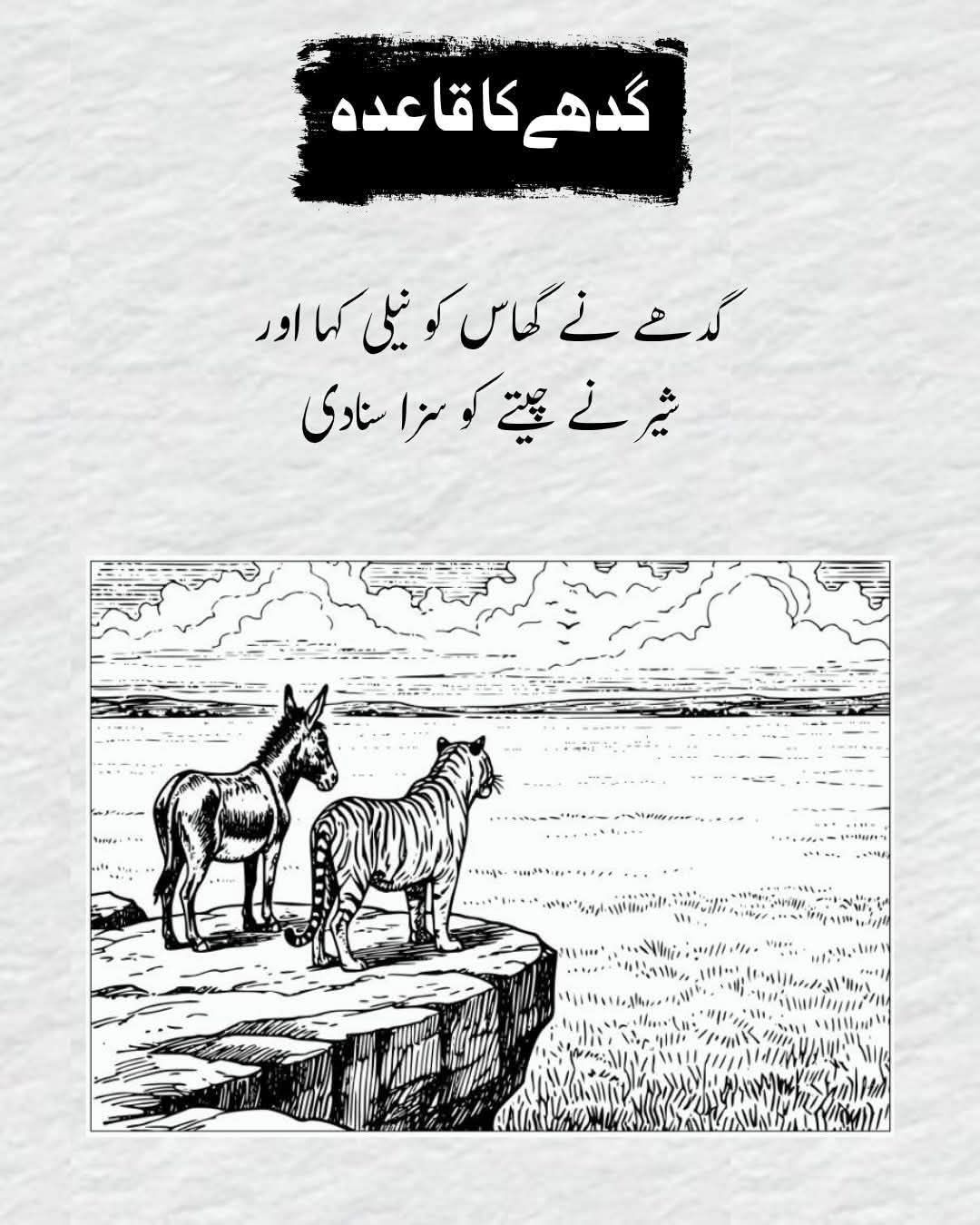
🐴 The Rule of the Donkey: A Lesson in Truth and Justice
ایک دن گدھے اور چیتے کی گھاس کے رنگ پر بحث ہوگئی
گدھے نے چیتے سے کہا گھاس ’نیلی‘ ہے
چیتا ہڑبڑا گیا، اس نے زور دے کر کہا
بے وقوف! بالکل واضح طور پر گھاس سبز ہے
لیکن گدھے نے بات نہیں مانی اور بولا گھاس نیلی ہی ہے
بحث زیادہ بڑھی تو دونوں حتمی فیصلے کے لیے شیر بادشاہ کے پاس چلے گئے
گدھے نے شیر سے کہا باشاہ سلامت گھاس نیلی ہے
شیر نے جواب دیا بالکل گھاس نیلی ہے
لیکن گدھا اتنے پر ہی راضی نہیں ہوا
اس نے مطالبہ کیا کہ ۔۔ چیتے نے بہت دیر تک بحث کی ہے، اس کو سزا ملنی چاہیے
شیر نے چیتے کو ایک سال خاموش رہنے کی سزا سنادی
گدھا خوش ہوا اور ناچتا گاتا چلا گیا
گدھے کے جاتے ہی چیتے نے شکوہ کیا کہ
’بادشاہ سلامت سب جانتے ہیں کہ گھاس واضح طور پر سبز ہے اس کے باوجود آپ نے مجھےسزا دی‘
شیر نے جواب دیا ہاں بالکل گھاس سبز ہے اس میں کوئی شک نہیں
لیکن تمہیں گھاس کا رنگ غلط بتانے پر نہیں
بلکہ ایک گدھے سے بحث کرنے پر سزا دی گئی ہے
کیوں کہ ایسا کوئی عقلمند نہیں ہوسکتا
جو کسی بے وقوف کے سامنے کچھ ثابت کرنے کی کوشش کرے—
Stories and symbols often carry wisdom far beyond their surface. The illustration of a donkey and a tiger, accompanied by the Urdu phrase “گدھے کا قاعدہ: گدھے نے گھاس کو نیلی کہا اور شیر نے چیٹے کو سزا دی” — “The donkey called the grass blue, and the lion punished the cheetah” — is one such parable. It may seem strange at first glance, but it holds a deep moral about perception, authority, and justice.
🌍 English Reflection
The donkey insists that the grass is blue. Of course, grass is green, but the donkey refuses to accept reality. Instead of correcting the donkey, the lion — symbol of authority — punishes the cheetah. Why? Because the cheetah wasted time arguing with a creature that cannot be reasoned with.
This story teaches us several lessons:
- Futility of arguing with ignorance: Some debates are pointless. When someone is committed to falsehood, no amount of logic will change their mind.
- Value of time and energy: The cheetah’s mistake was not in being wrong but in wasting energy on a fruitless argument.
- Authority’s perspective: The lion, as a symbol of justice, recognizes that truth does not need defending against stubborn ignorance. Instead, wisdom lies in walking away.
- Perception vs. reality: Just because someone insists on a false view does not make it true. Reality remains unchanged.
In our daily lives, we often encounter “donkeys” — people who deny facts, distort reality, or cling to baseless claims. The lesson is clear: do not waste your peace of mind trying to convince them. Silence and distance are sometimes the wisest responses.
🌿 اردو تجزیہ
یہ کہانی ہمیں ایک گہرا سبق دیتی ہے۔
گدھا ضد کرتا ہے کہ گھاس نیلی ہے۔ حقیقت میں گھاس سبز ہے، لیکن گدھا ماننے کو تیار نہیں۔ شیر، جو انصاف کی علامت ہے، گدھے کو سزا نہیں دیتا بلکہ چیٹے کو سزا دیتا ہے۔ کیوں؟ کیونکہ چیٹے نے اپنا وقت اور توانائی ایک بے فائدہ بحث میں ضائع کی۔
اہم اسباق:
- جہالت کے ساتھ بحث کرنا بے کار ہے۔
- وقت اور توانائی قیمتی ہیں، انہیں ضائع نہ کریں۔
- حقیقت اپنی جگہ قائم رہتی ہے، چاہے کوئی اسے مانے یا نہ مانے۔
- بعض اوقات خاموشی اور دوری ہی بہترین جواب ہوتے ہیں۔
ہماری زندگی میں بھی ایسے لوگ ملتے ہیں جو حقیقت کو ماننے سے انکار کرتے ہیں۔ ان کے ساتھ بحث کرنا صرف وقت کا ضیاع ہے۔ اصل دانش یہ ہے کہ ہم اپنی توانائی مثبت کاموں میں لگائیں۔
✍️ Conclusion
The donkey’s rule is not about grass or colors; it is about wisdom in dealing with ignorance. The cheetah’s punishment reminds us that engaging in pointless arguments can cost us dearly.
In a world full of noise, misinformation, and stubbornness, the true philosopher is the one who knows when to speak — and when to walk away.
So perhaps the perfect title for this picture is:
“The Cost of Arguing with Ignorance”


If you’ve ever been dealing with Suno AI created tracks, you should have noticed the presence of suno distortions that impact the total audio output. [url=https://aiartifactremover.top]suno mastering online[/url] Happily, tools like the suno artifact eraser and suno audio purifier can help remove these suno AI artifacts efficiently, elevating the definition and making the sound feel more genuine. There are even free online solutions that act as an ai music restorer to correct regular issues and process suno ai tracks quickly.
For those having difficulty to get refined results, using a suno mastering tool can dramatically refine the sound quality by resolving suno audio output problems and finalizing the end mix. If you need to find some solid solutions for suno audio artifact reduction or want to find out how to make suno voice sound natural, look at this resource —it explains all topics from suno artifact removers to professional ai music vocal enhancers.